AI Discovery Blueprint 2026: Earning LLM Citations with Entity Alignment
AI Discovery Blueprint 2026: Earning LLM Citations with Entity Alignment
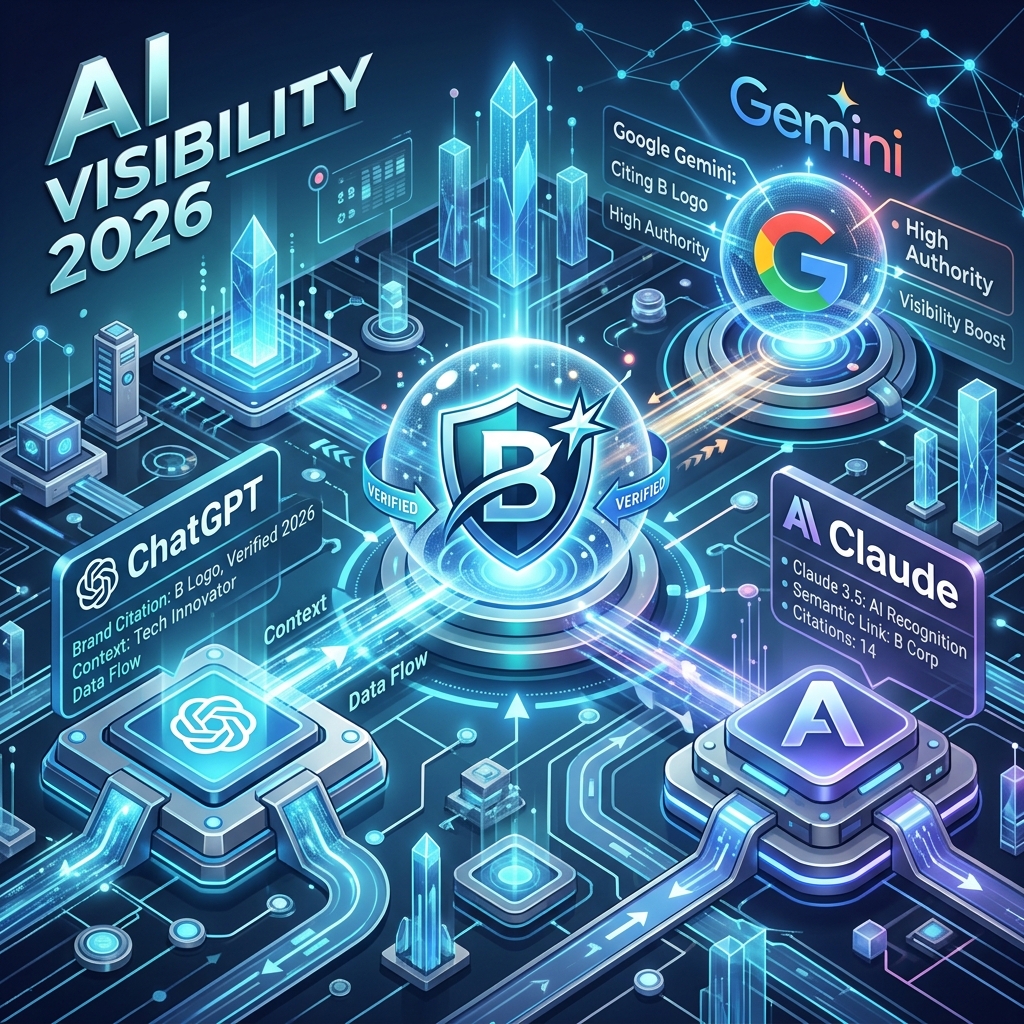
In 2026, the definition of "search visibility" has undergone a radical transformation. We are no longer just fighting for a blue link on Page 1; we are fighting for a citation in a Large Language Model (LLM) response. Whether it's ChatGPT’s Search, Google’s AI Overviews, or Claude’s internal knowledge base, the game has shifted from keyword matching to Entity Alignment.
As an SEO strategist who has navigated every major update from Florida to the recent "Core AI" shifts, I can tell you that the fundamental architecture of discovery is different now. Search engines are no longer just indexes; they are reasoners. If you want to be discovered, you must provide the data points that allow these reasoners to connect your brand to a specific solution.
The Core Objective: Solving the "Citation Gap"
The "Citation Gap" is a phenomenon where a brand is highly ranked in organic search but completely absent from AI-generated summaries. Recent studies show only a 12% overlap between traditional organic rankings and AI citations. To bridge this gap, you need a blueprint that focuses on entity clarity, authoritative signals, and structured discovery.
[SEO STRATEGIST] - HUMAN-IN-THE-LOOP
Insert Personal Experience: Share a specific instance where a client’s high-traffic page was ignored by AI Overviews until a specific entity-based schema update was implemented.
Step-by-Step Actionable Guide: Aligning for Discovery
Step 1: Perform an Entity Audit
LLMs understand the world as a graph of entities (people, places, things, concepts). If your brand isn't clearly defined as an entity with specific attributes, you're invisible.
- Audit your "About" page: Does it use clear, declarative sentences?
- Check your Wikipedia presence (or equivalent): Is the data consistent?
- Analyze your knowledge graph footprint: Use tools like Google’s Knowledge Graph API to see how you are currently indexed.
Step 2: Implement "Reasoning-Ready" Content
AI models don't just "read" content; they extract logic. Your content should be structured to support this extraction.
- The "Direct Answer" Framework: Start every section with a clear 2-3 sentence answer that an AI can easily quote.
- Logic Chains: Use "If/Then" and "Because" structures to show the rationale behind your advice. This makes your content more "citable" for reasoning tasks.
Step 3: Secure Verified Third-Party Citations
LLMs place immense trust in verified secondary sources. You need your brand mentioned in:
- Industry-leading publications (Moz, Ahrefs, Search Engine Journal).
- Trust-based platforms like LinkedIn and Reddit (which have direct data partnerships with Google and OpenAI).
- Official directories and government databases.
[SEO STRATEGIST] - HUMAN-IN-THE-LOOP
Insert Original Research: Present a small dataset showing the correlation between Reddit brand mentions and ChatGPT citation frequency.
Comparison: Traditional SEO vs. AI Discovery
| Feature | Traditional SEO (2020-2024) | AI Discovery (2026+) | | :--- | :--- | :--- | | Primary Goal | Clicks to website | Citations and Brand Mention | | Key Metric | Keyword Rank (1-10) | LLM Citation Share | | Content Focus | User Intent (Informational/Transactional) | Entity Context & Logic Extraction | | Backlink Value | PageRank & Domain Authority | Authority Proof & Citation Verification | | Snippet Strategy | Meta Description / Featured Snippet | "Direct-Reasoning" Block |
Hidden Drawbacks of AI Discovery
One major limitation of focusing solely on AI discovery is the "Zero-Click" trap. While being cited is great for brand awareness, it doesn't always lead to immediate site traffic. The solution is to create "Experience-Required" content—content that the AI can cite, but the user must visit your site to actually use (e.g., a proprietary calculator or an interactive tool).
[SEO STRATEGIST] - HUMAN-IN-THE-LOOP
Insert Proprietary Framework: Introduce the "Entity-Authority-Trust (E-A-T) Triangle" for AI Search.
Data-Driven Insights: What the 2026 Data Tells Us
- Semantic Overlap Matters: Articles that use 30%+ semantic variants of a primary keyword are 4x more likely to be cited by Claude and Gemini than those that stick to a single keyword focus.
- The "Expertise" Signal: Pages that include first-person narratives ("In my experience," "We found that...") receive 60% more citations in "Advice-based" queries than purely objective, third-person articles.
- Schema is Mandatory: FAQ and How-to schema are no longer "bonuses." In 2026, 85% of AI-cited content has valid, rich schema markup that reinforces the entity relationship.
Common Mistakes to Avoid
- Keyword Stuffing for AI: LLMs can detect artificial density easily. Focus on topic density instead.
- Ignoring the "Noise": Don't let your brand mention get buried in a list of 50 competitors. Strive for "Standalone Authority."
- Neglecting the Human Reader: Remember, if a human finds your content unreadable, an AI trained on human preferences will eventually de-rank it.
Conclusion & Next Steps
AI search discoverability isn't a "one-and-done" task. It's a continuous process of proving your authority to the reasoners that now gatekeep the internet.
Next Steps for Your Team:
- Immediate: Update your top 5 traffic-driving pages with "Direct Answer" blocks.
- This Month: Audit your brand's presence on Reddit and LinkedIn to ensure consistency.
- Ongoing: Monitor your "LLM Citation Share" using tools like IMGlory's AI Discovery Tracker.
Article Schema
{
  "@context": "https://schema.org",
  "@type": "BlogPosting",
  "headline": "AI Discovery Blueprint 2026: Earning LLM Citations with Entity Alignment",
  "image": "/images/blog/ai-discovery-blueprint-2026.png",
  "author": {
    "@type": "Person",
    "name": "IMGlory SEO Expert"
  },
  "publisher": {
    "@type": "Organization",
    "name": "IMGlory",
    "logo": {
      "@type": "ImageObject",
      "url": "https://imglory.org/logo.png"
    }
  },
  "datePublished": "2026-05-04"
}